Terror in Paradise: The Bondi Beach Attack and the Global Hunt for Answers
A Day of Celebration Shattered
Bondi Beach is a global symbol of Australian life. Its golden sand and turquoise waves paint a picture of sun-drenched leisure. On the evening of December 14, 2025, this scene turned from joyful to horrific. The local Jewish community was holding a Hanukkah festival at the Bondi Pavilion. Suddenly, the sounds of celebration were ripped apart by gunfire.
Two men, dressed in black, moved through the crowd with terrifying coordination. They were 50-year-old Sajid Akram and his 24-year-old son, Naveed. For ten agonizing minutes, they fired upon hundreds of people. Panic erupted as people ran for their lives or sought cover. Ultimately, police shot both attackers. Sajid Akram died at the scene, but his son survived in critical condition.
The human toll was devastating. In total, sixteen people lost their lives, including the older gunman. Dozens more suffered injuries, with twenty-five requiring hospital care. The victims came from all walks of life. They included a beloved rabbi, a Holocaust survivor, and a young girl named Matilda Britvan. Her family described their profound heartbreak, a feeling shared by the entire nation.
A Hero Emerges from the Chaos
Amid the terror, an incredible act of courage unfolded. Ahmed al Ahmed, a 43-year-old Muslim father, was at the beach with his family. Instead of fleeing, he charged directly at one of the gunmen. A fierce struggle followed, and Ahmed managed to wrestle the rifle away. He was shot during the fight, but his bravery likely saved many lives. Paramedics rushed him to the hospital for emergency surgery.
Ahmed’s actions made him an instant hero. People around the world praised his stunning bravery. Furthermore, a public fundraiser for his recovery gathered millions of dollars in just days. This overwhelming support sent a powerful message. It showed that the public rejected the attackers’ goal of sowing division.
The Investigation Reveals an International Plot
Police immediately launched a massive investigation. They quickly identified the gunmen and uncovered a critical clue. Just weeks before the attack, Sajid and Naveed Akram had traveled to the Philippines. Immigration records show they arrived on November 1 and stayed for almost the entire month. Their stated destination was Davao, a region in the southern Philippines known for militant activity.
This discovery alarmed intelligence agencies. For instance, groups linked to the Islamic State (ISIS) have historically operated in that area. Australian Federal Police Commissioner Krissy Barrett soon stated the obvious. “Early indications point to a terrorist attack inspired by Islamic State,” she told reporters. Later, police found homemade ISIS flags and unexploded bombs in the attackers’ car. This evidence strongly supported the terror link.
Authorities are now intensely focused on that trip. They want to know if the Akrams received training or met with extremists. Currently, Philippine and Australian police are working together to trace their movements.
A Family in India Expresses Shock
The investigation also reached across the ocean to India. Sajid Akram originally came from the city of Hyderabad. Indian police contacted his family there, but they were baffled. They told authorities they knew nothing about any radical beliefs. In fact, Sajid had moved to Australia back in 1998 and visited India only rarely.
Telangana state police released a statement to clarify matters. They said the family had “no knowledge of his radical mindset.” Importantly, they stressed that the radicalization seemed to have no connection to India. This was an attempt to prevent any unfair backlash against the local community.
Scrutiny Falls on Australian Systems
The attack forced Australia to examine its own security and laws. Prime Minister Anthony Albanese confirmed a troubling fact. The younger attacker, Naveed, had actually been interviewed by intelligence agents in 2019. However, officials at the time decided he was not a major threat. This revelation sparked a difficult debate about whether warning signs were missed.
Next, a fierce discussion about gun control erupted. Australia has some of the world’s strictest gun laws, established after the 1996 Port Arthur massacre. Despite this, Sajid Akram held a gun license and owned six registered weapons. He obtained his license in 2023, just two years before the attack. People demanded to know how someone planning terror could pass the legal checks. Consequently, the government announced an immediate review of firearm regulations.
A Community Grapples with Fear and Grief
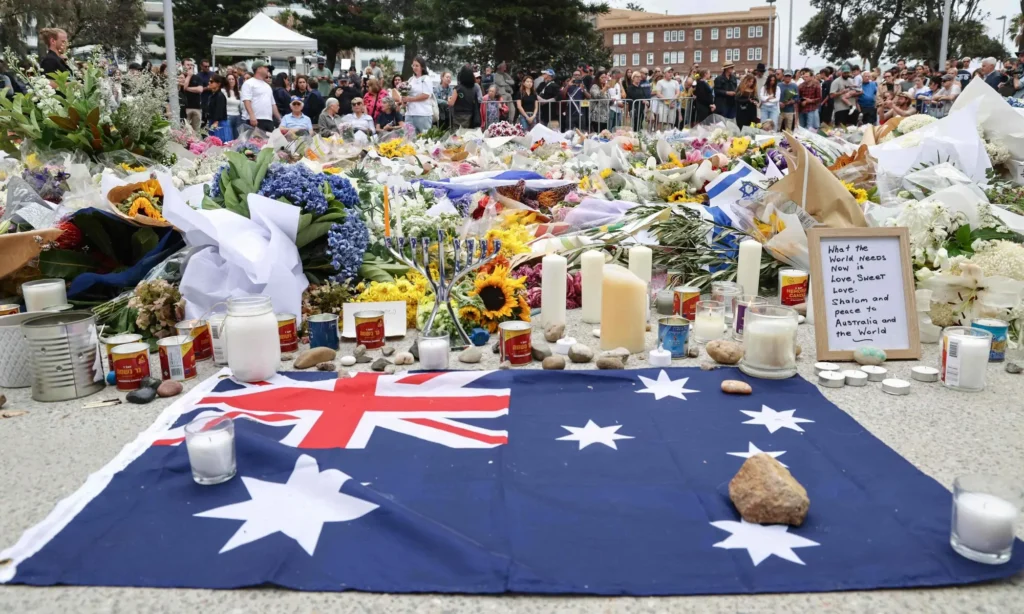
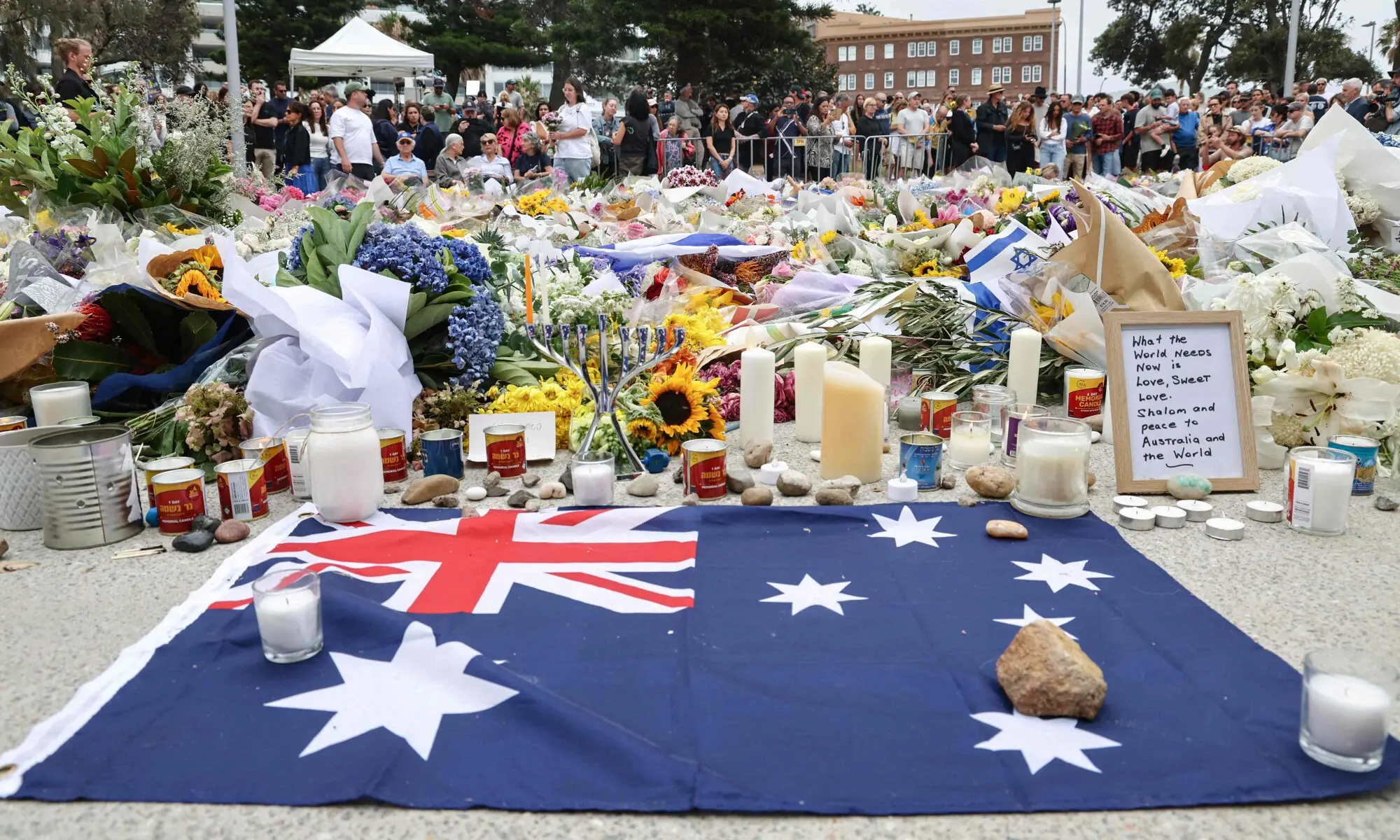
The emotional aftermath was profound. Bondi Beach itself, usually vibrant and loud, fell into a somber silence. A huge memorial of flowers, toys, and notes grew on the pavilion steps. Locals came not to swim, but to mourn. “This happened right here in our backyard. It’s pretty shocking,” said one visitor, capturing the national disbelief.
For Jewish Australians, the trauma cut especially deep. The attack was the deadliest in a recent wave of anti-Semitic incidents. Israeli Ambassador Amir Maimon visited the memorial and made an emotional plea for safety. “Only Australians of Jewish faith are forced to worship behind closed doors, CCTV, and guards,” he stated. His words highlighted a growing fear within the community.
Leadership and the Path Forward
Prime Minister Albanese addressed the nation with a clear message. He stated the attackers were driven by “Islamic State ideology.” He also pledged to strengthen community safety and combat hate. However, his political opponents argued the government should have acted sooner against anti-Semitism.
Meanwhile, the review of gun laws began. Former Prime Minister John Howard, who created the current system, warned against losing focus. He argued that fighting extremist ideology was just as important as changing regulations.
The Long Road Ahead
The Bondi Beach attack left deep scars. It showed how a small, radicalized family could bypass sophisticated security systems. It also revealed how global terror networks can inspire violence from afar. Today, the investigations in Australia and the Philippines continue. Authorities are piecing together the final steps of the attackers’ journey to radicalization.
Ultimately, the story of that night includes both profound darkness and brilliant light. It carries the tragedy of innocent lives lost. Yet, it also holds the heroism of Ahmed al Ahmed and the overwhelming public unity that followed. The calm of Bondi has been fractured, and the nation now faces the hard work of healing and strengthening its defenses for the future.