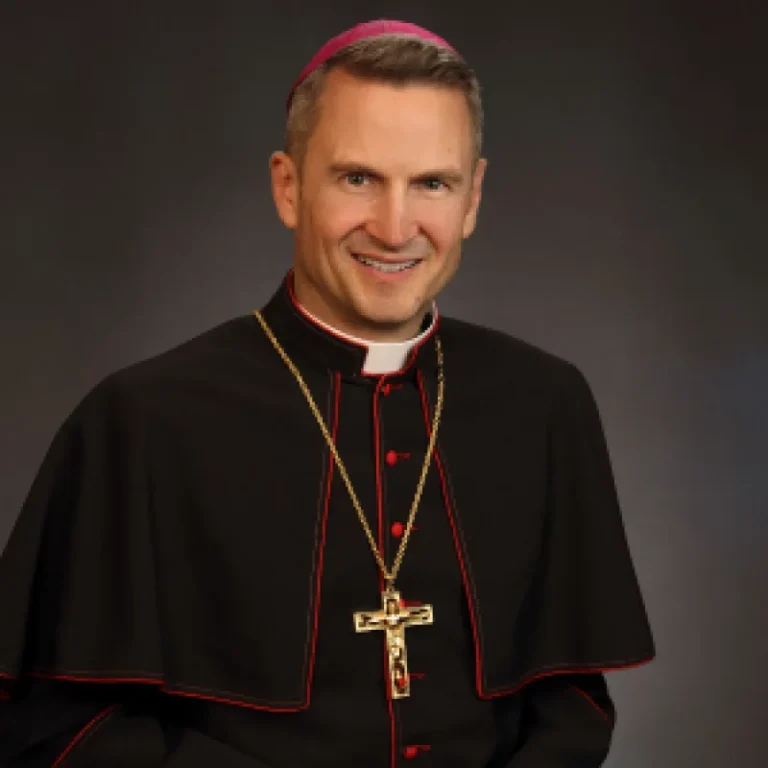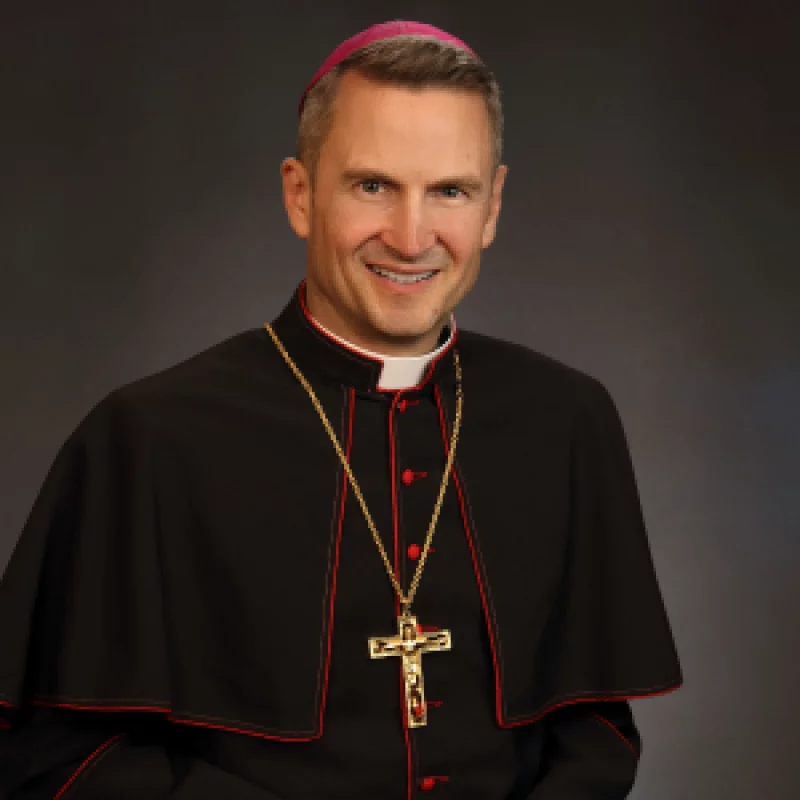
VATICAN CITY (RNS) — In a significant appointment that will shape the future of American Catholicism, Pope Leo XIV has named Bishop Ronald A. Hicks of Joliet, Illinois, as the next Archbishop of New York. He succeeds Cardinal Timothy Dolan, a towering and charismatic figure who has led the archdiocese and its 2.8 million Catholics for the past 16 years.
Cardinal Dolan’s departure follows standard Vatican procedure, having submitted his resignation upon turning 75 this past February.
At 58, Bishop Hicks emerges as a prominent standard-bearer for Pope Francis’—and now Pope Leo’s—vision of a more welcoming, inclusive, and socially engaged Church. His selection signals a deliberate continuity with this pastoral approach, prioritizing outreach and justice.
The new archbishop shares a striking personal history with Pope Leo XIV. Both hail from Chicago’s South Side; Hicks was born in Harvey in 1967 and grew up in South Holland, a community near the Pope’s own hometown. “We grew up literally in the same radius, in the same neighborhood together. We played in the same parks, went swimming in the same pools, liked the same pizza places to go to,” Hicks recalled in an interview earlier this year with Chicago’s WGN TV.
“Their similar biographies mean that it’s personal. Leo recognizes himself in Hicks and vice versa,” said Christopher White, author of Pope Leo XIV: Inside the Conclave and the Dawn of a New Papacy. “Hicks’ personality is different from Dolan’s. He won’t be shy, and at the same time he will also bring a seriousness and willingness to learn that’s likely to help him on a local level that will be different from Dolan’s larger-than-life persona.”
Their alignment extends beyond geography to formative ministerial experiences. Mirroring Leo’s decade-plus service in Peru, Hicks’ priesthood was profoundly shaped by five years in El Salvador from 2005 to 2010. There, he served as regional director for Nuestros Pequeños Hermanos, a nonprofit home for orphaned and abandoned children.
“The encounter with the Latin American church, where his priestly ministry was defined by standing in solidarity with the poor and marginalized, means this is in the DNA of both men,” noted White, who is also a senior fellow at Georgetown University’s Initiative on Catholic Social Thought and Public Life. “That’s one of the essential qualities Leo—like Francis—is looking for when assessing candidates for the Catholic hierarchy.”
Hicks’ administrative path included key roles in the Chicago Archdiocese. After returning from El Salvador, he was appointed dean of formation at Mundelein Seminary in Illinois. The Rev. John Kartje, who worked with him before becoming rector, praised Hicks’ balance of managerial skill and pastoral heart. “This is someone who is capable of administration at the highest levels, but very much has his heart and soul with the people and particularly marginalized populations,” Kartje said. Hicks later served as vicar general for Chicago, a role Kartje called “one of the most challenging positions in any diocese.”
In 2018, he became an auxiliary bishop under Cardinal Blase Cupich, a close ally of Pope Francis who played a pivotal role in the conclave that elected Leo. Hicks’ elevation to New York bears the marks of Cupich’s influence and represents a clear endorsement of this papal vision. Pope Francis appointed Hicks to lead the Diocese of Joliet in 2020.
Hicks now steps into one of the most prominent and complex pulpits in the global Church. His relative youth positions him to leave a lasting imprint on the influential archdiocese for years to come. Historically, New York’s archbishops have played major roles in the city’s and the nation’s social and political life. Hicks will become the public face of New York Catholicism at a symbolic moment, as Zohran Mamdani prepares to be sworn in as the city’s first Muslim mayor.
The appointment traditionally brings with it a cardinal’s red hat, cementing the archbishop’s place among the Church’s senior leadership.
Yet the role arrives amid immense challenges. The Archdiocese of New York is navigating a profound financial and pastoral crisis, having recently agreed to mediation to settle approximately 1,300 sex abuse claims. To fund a $300 million settlement for survivors, it is selling Manhattan properties while also restructuring or closing dozens of parishes with declining membership. Bishop Hicks will thus be tasked not only with providing spiritual leadership but also with guiding a wounded and transforming archdiocese toward stability and renewal.